Why Target Is One of the Most Dangerous Stores for Impulse Spending
Why Target Is One of the Most Dangerous Stores for Impulse Spending
Few retailers in modern consumer culture have mastered impulse spending quite likeTarget.
Walk into almost any Target store and you’ll notice the same pattern: customers arrive with a simple list, maybe a few household essentials, toiletries, or groceries, and leave with far more than they originally intended to buy.
What makes this especially interesting is that most shoppers don’t feel like they overspent.
In fact, Target has built an entire retail experience designed to make extra spending feel natural, justified, and even enjoyable.
This is not accidental.
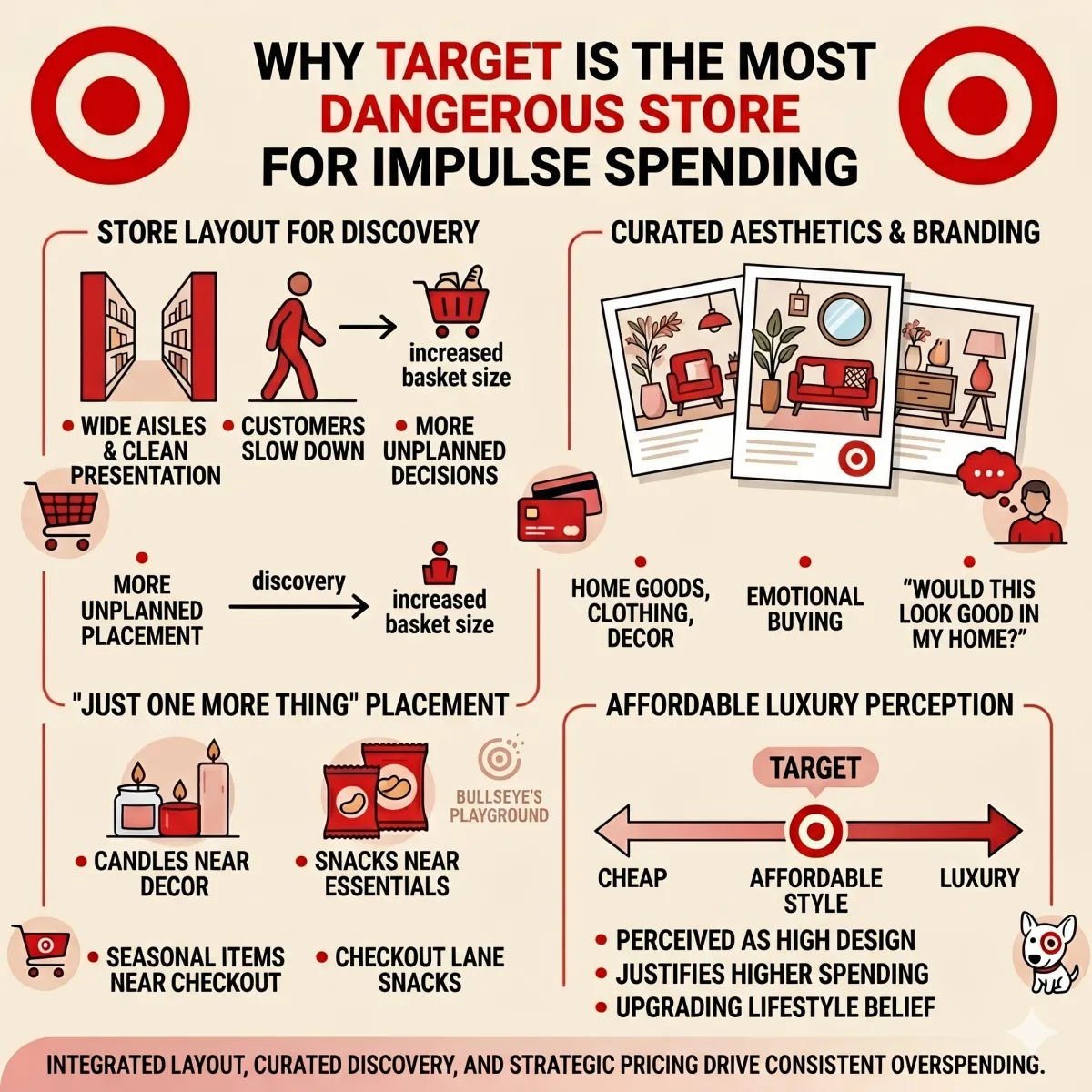
Target has developed one of the most effective in-store psychology systems in retail by combining layout design, emotional branding, pricing strategy, and curated product discovery into a seamless shopping experience that consistently increases basket size.
Here’s why Target is so effective at driving impulse spending and what businesses can learn from it.
The “Expectations vs Reality” Shopping Effect
One of Target’s most powerful advantages starts before customers even enter the store.
Most shoppers think of Target as a place to quickly grab a few things.
That expectation creates a mental framework of low spending.
But once inside, that expectation is quickly challenged.
Bright visuals, curated displays, and organized sections subtly encourage browsing rather than strict list-following.
This gap between intention and experience is where impulse spending begins.
Customers do not feel like they’re shopping excessively, they feel like they’re just looking.
That shift is intentional.
Store Layout Designed for Discovery, Not Efficiency
Unlike warehouse-style retailers that focus on bulk efficiency, Target is designed for exploration.
Wide aisles, clean presentation, and visually appealing displays slow down customer movement.
And slowing down customers is one of the most effective ways to increase spending.
When customers move slowly through a store, they:
see more products
engage with more categories
experience more unexpected finds
make more unplanned decisions
Even basic errands turn into extended browsing sessions.
This increased exposure naturally leads to higher basket sizes.
The Power of “Bullseye’s Playground” and Seasonal Traps
One of Target’s most recognizable strategies is its seasonal and dollar sections, often referred to as “Bullseye’s Playground.”
This area is strategically placed near store entrances, where foot traffic is highest.
Customers walking in for basic necessities are immediately exposed to:
inexpensive seasonal items
themed decorations
small impulse buys
limited-time deals
The key psychological trick here is price perception.
Low-cost items feel harmless.
A $1 to $5 purchase does not feel like spending, even when multiple items are added to the cart.
These small decisions compound quickly, often increasing total spending without the customer noticing.
Aesthetic Product Design Encourages Emotional Buying
Target has successfully blurred the line between retail and lifestyle branding.
Products are not just presented as items, they are displayed as part of a curated aesthetic experience.
Home goods, clothing, and decor are organized in a way that mirrors social media trends and modern design styles.
This creates a powerful emotional effect.
Customers begin to visualize products in their own lives.
Instead of asking “Do I need this?” they start asking:
Would this look good in my home
Does this match my style
Could I use this later
This emotional framing leads to significantly more impulse purchases.
“Just One More Thing” Product Placement Strategy
Target is particularly effective at cross-category placement.
Items are intentionally positioned to encourage secondary purchases.
For example:
candles placed near home decor
snacks near household essentials
seasonal items near checkout lanes
clothing near lifestyle accessories
Each section is designed to trigger the thought:
“I might as well grab this too.”
This small psychological nudge is one of the biggest drivers of impulse spending in retail environments.
The Checkout Lane Effect
Even as customers prepare to leave, Target continues to influence spending behavior.
Checkout lanes are lined with:
small snacks
inexpensive gadgets
seasonal mini-products
last-minute convenience items
These are low-friction purchases.
Customers are already committed to buying, mentally and financially, so decision resistance is at its lowest point.
This is where many final impulse purchases happen.
Even a single additional item at checkout can significantly increase total cart value across millions of transactions.
The “Affordable Luxury” Positioning Strategy
One of Target’s biggest psychological advantages is its branding position.
It is not perceived as cheap, but it is also not perceived as luxury.
Instead, Target occupies a unique space, affordable style.
This creates a powerful consumer mindset.
Customers feel like they are getting better design, better aesthetics, and better quality without luxury pricing.
This perception justifies higher spending.
People are more willing to buy non essential items when they believe they are upgrading their lifestyle.
Emotional Shopping vs Functional Shopping
Most retailers compete on function:
lowest price
fastest trip
most efficient shopping
Target competes on emotion.
Customers do not just shop at Target, they experience it.
That emotional engagement is what transforms planned purchases into impulse spending.
The longer customers stay emotionally engaged, the more they buy.
Why Target Customers Consistently Overspend
At its core, Target’s success comes from controlling three things:
attention
emotion
perception
Customers enter with a plan.
But they are met with an environment designed to:
slow them down
show them more than expected
make products feel desirable
and reduce spending resistance
The result is predictable:
Higher basket sizes and more impulse purchases.
What Businesses Can Learn From Target
Target’s success offers several key lessons for modern retail and consumer brands:
1. Experience Drives Spending
The longer customers stay engaged, the more they buy.
2. Emotion Beats Efficiency
Feelings influence spending more than logic.
3. Small Purchases Add Up
Low cost impulse items significantly increase total revenue.
4. Discovery Is Powerful
Customers spend more when they feel like they are finding products.
5. Aesthetic Matters
Presentation directly influences perceived value.
Final Thoughts
Target has built one of the most effective impulse driven retail environments in the world.
Customers rarely feel pressured to spend more, instead they feel like they are discovering value along the way.
That is what makes it so powerful.
It is not just a store.
It is a carefully designed consumer experience that turns everyday errands into unplanned spending behavior.
And that is exactly why Target remains one of the strongest performers in modern retail psychology.
