Why Costco Customers Spend More Than Expected
Why Costco Customers Spend More Than Expected
Few companies in retail have mastered customer behavior quite likeCostco.
Walk into almost any Costco warehouse and you’ll see packed parking lots, oversized shopping carts, and customers leaving with far more items than they originally planned to buy.
What makes this remarkable is that many shoppers enter Costco believing they are going to “save money.”
And in many cases, they do.
But they also spend significantly more per visit than they expected.
This is not an accident.
Costco has built one of the most effective retail systems in the world by combining psychology, pricing strategy, customer trust, and operational design into a shopping experience specifically engineered to increase spending while still making customers feel financially smart.
The result is one of the most loyal customer bases in retail and one of the highest average transaction values in the industry.
Here’s why Costco customers consistently spend more than expected — and what businesses can learn from it.
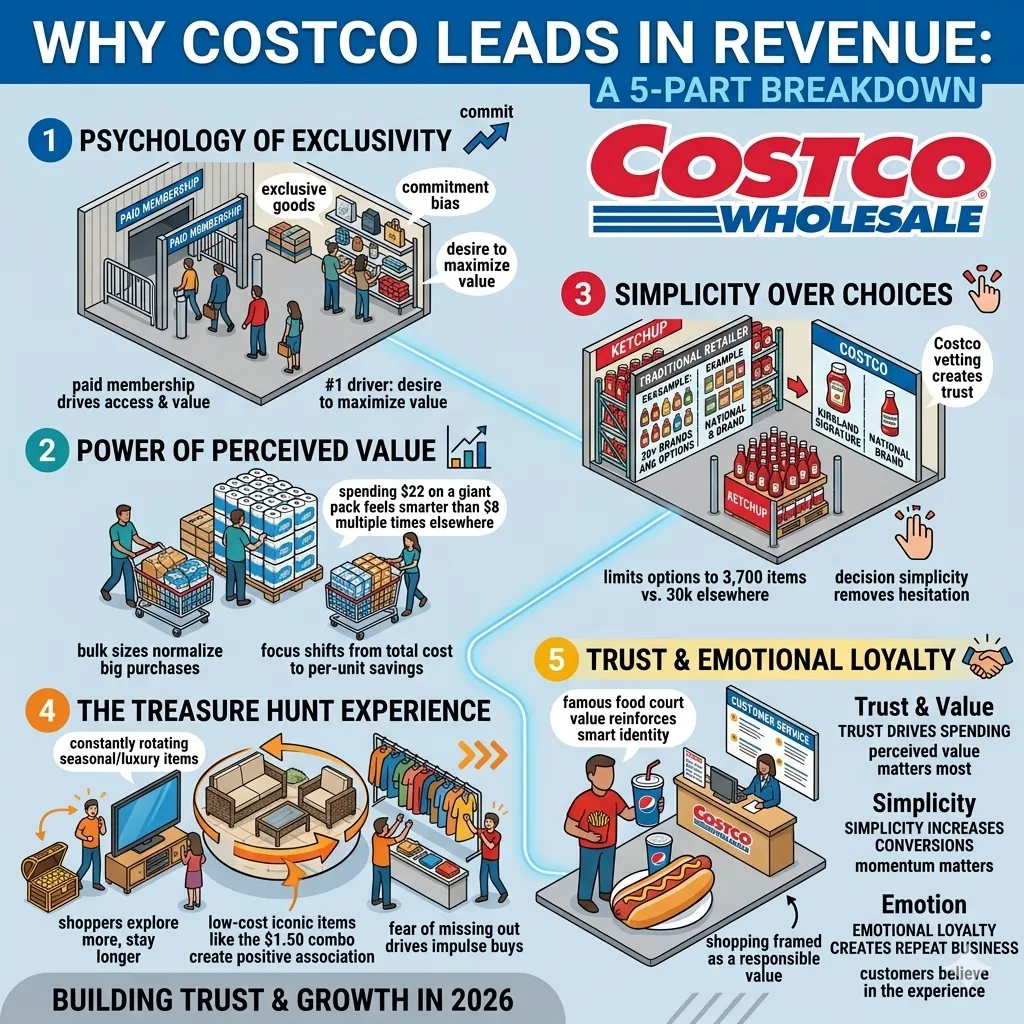
The Membership Model Changes Customer Psychology
One of Costco’s biggest advantages starts before customers even enter the store.
Unlike traditional retailers, Costco operates on a paid membership model.
Customers pay upfront simply for access to shop there.
This immediately changes consumer psychology.
Once customers purchase a membership, they subconsciously feel motivated to maximize the value of that membership.
This creates a behavioral effect often called “commitment bias.”
Customers begin thinking:
“I should shop here more.”
“I need to make the membership worth it.”
“I’ll save money if I buy in bulk.”
As a result, customers arrive at Costco already primed to spend.
The membership also creates exclusivity.
Shopping at Costco feels less like visiting a standard grocery store and more like gaining access to insider pricing and special deals.
That feeling increases perceived value before purchases even happen.
Bulk Buying Feels Like Saving
Costco’s entire model is built around bulk purchasing.
Larger quantities create the perception of better value.
Even when customers spend more total money, the lower per-unit cost makes purchases feel financially responsible.
For example:
spending $22 on a giant pack of paper towels feels smarter than
spending $8 multiple times elsewhere
even though the total purchase is significantly larger.
This changes spending behavior dramatically.
Customers focus less on:
total cart value
and more on:
perceived savings
value efficiency
cost-per-unit
Costco successfully reframes higher spending as “smart spending.”
This psychological shift is one of the company’s most powerful revenue drivers.
Limited Selection Increases Confidence
One of Costco’s most underrated strategies is carrying fewer choices than traditional retailers.
Most grocery stores overwhelm customers with options.
Costco does the opposite.
Instead of offering:
37 ketchup brands
22 cereal variations
endless competing products
Costco intentionally limits selection.
This creates decision simplicity.
Customers assume:
Costco already selected the best value
products are vetted carefully
fewer options mean higher quality
This dramatically reduces purchasing hesitation.
Customers spend less time comparing products and more time buying confidently.
Too many choices create friction.
Costco removes friction.
And reduced friction increases spending.
Treasure Hunt Psychology Keeps Customers Exploring
Costco has mastered what retail experts call the “treasure hunt” experience.
Customers never fully know what they will discover during each visit.
Alongside everyday essentials, Costco frequently rotates:
seasonal products
luxury items
electronics
furniture
specialty foods
limited-time deals
This unpredictability creates excitement.
Customers wander more.
Browse longer.
And make more impulse purchases.
Many shoppers enter Costco planning to buy:
groceries
paper towels
household supplies
and leave with:
patio furniture
a giant TV
kitchen appliances
clothing
snacks they never intended to buy
The constantly changing inventory encourages repeat visits because customers fear missing future deals.
Scarcity drives urgency.
Urgency drives spending.
Costco Makes Big Purchases Feel Reasonable
Costco’s warehouse design plays a huge role in customer spending behavior.
Everything inside Costco is oversized:
carts
aisles
packaging
shelves
product displays
This changes perception.
A massive shopping cart with only a few items inside appears “empty,” even when those items already total hundreds of dollars.
Customers unconsciously continue adding products because the visual space suggests they have not bought much yet.
Similarly, large packaging normalizes large purchases.
Buying:
a 40-pack of water bottles
a 5-pound container of snacks
oversized frozen food packs
begins feeling normal inside the warehouse environment.
Costco subtly resets customer expectations around quantity and spending.
Trust Reduces Spending Resistance
One reason Costco customers spend so freely is because they trust the brand.
Trust lowers purchase anxiety.
Costco has built a reputation around:
quality control
fair pricing
generous return policies
reliable products
strong customer satisfaction
Customers often believe:
“If Costco carries it, it’s probably worth buying.”
That trust dramatically reduces hesitation.
Businesses that build strong trust signals create smoother purchasing decisions.
When customers trust pricing and product quality, they spend faster and more confidently.
Costco’s reputation allows customers to make larger purchases with less emotional resistance.
The Food Court Reinforces Customer Loyalty
Even Costco’s famous food court serves a larger strategic purpose.
Low-cost items like:
pizza
hot dogs
churros
frozen treats
create perceived generosity.
Customers feel Costco is “giving value back.”
The iconic low-priced hot dog combo has become symbolic of Costco’s customer-first reputation.
Importantly, these inexpensive offerings reinforce emotional loyalty.
Customers associate Costco with:
affordability
fairness
family value
smart spending
This emotional relationship strengthens long-term retention and repeat spending.
Scarcity Creates Urgency
Costco intentionally limits inventory quantities and rotates products frequently.
Customers know:
certain items may disappear quickly
deals may not return
seasonal products are temporary
This creates urgency psychology.
Consumers become more likely to purchase immediately rather than delay decisions.
Scarcity increases perceived opportunity.
And perceived opportunity increases conversion rates.
Customers often buy products “just in case” because they fear losing access later.
This strategy significantly increases impulse spending.
High Average Income Customers Spend More Freely
Costco also benefits from attracting a financially stable customer base.
Many Costco shoppers are:
homeowners
families
higher-income households
suburban consumers
These customers often prioritize:
value efficiency
convenience
quality
over minimizing spending completely.
Costco appeals to consumers who enjoy feeling financially smart while still spending heavily.
That combination is extremely powerful.
Customers do not feel guilty spending large amounts because purchases are framed as responsible long-term value.
Costco Sells Identity, Not Just Products
One of the biggest reasons Costco succeeds is because it sells a lifestyle identity.
Shopping at Costco signals:
smart decision-making
practicality
efficiency
value awareness
Customers often feel proud of:
finding deals
buying in bulk
discovering hidden products
maximizing savings
Costco turns spending into a psychologically rewarding experience.
Customers leave feeling successful, even after spending hundreds of dollars.
Very few retailers achieve this emotional outcome consistently.
What Businesses Can Learn From Costco
Costco’s success offers important lessons far beyond retail.
Businesses in every industry can learn from Costco’s approach to customer psychology and trust.
Key takeaways include:
1. Trust Drives Spending
Customers spend more when they trust pricing, quality, and consistency.
2. Simplicity Increases Conversions
Too many choices create hesitation. Simplicity speeds decisions.
3. Momentum Matters
Active, engaging environments encourage exploration and spending.
4. Perceived Value Matters More Than Price Alone
Customers willingly spend more when purchases feel efficient and smart.
5. Emotional Loyalty Creates Long-Term Growth
Customers return repeatedly when businesses create positive emotional experiences.
Why Costco Continues to Win
Many retailers compete on:
lower prices
convenience
product selection
Costco competes differently.
It competes through:
trust
behavioral psychology
customer loyalty
perceived value
experience design
This creates one of the strongest business models in modern retail.
Costco customers do not simply shop there.
They believe in the experience.
And that belief keeps them spending more than expected year after year.
Final Thoughts
Costco’s success is not built solely on cheap products or bulk pricing.
It is built on understanding human behavior.
Every part of the Costco experience, from memberships and warehouse layouts to limited inventory and rotating products, is designed to encourage larger purchases while maintaining strong customer trust.
Customers spend more because Costco makes spending feel smart, efficient, and rewarding.
That combination is incredibly rare.
And it is one of the biggest reasons Costco remains one of the most successful retailers in the world.
