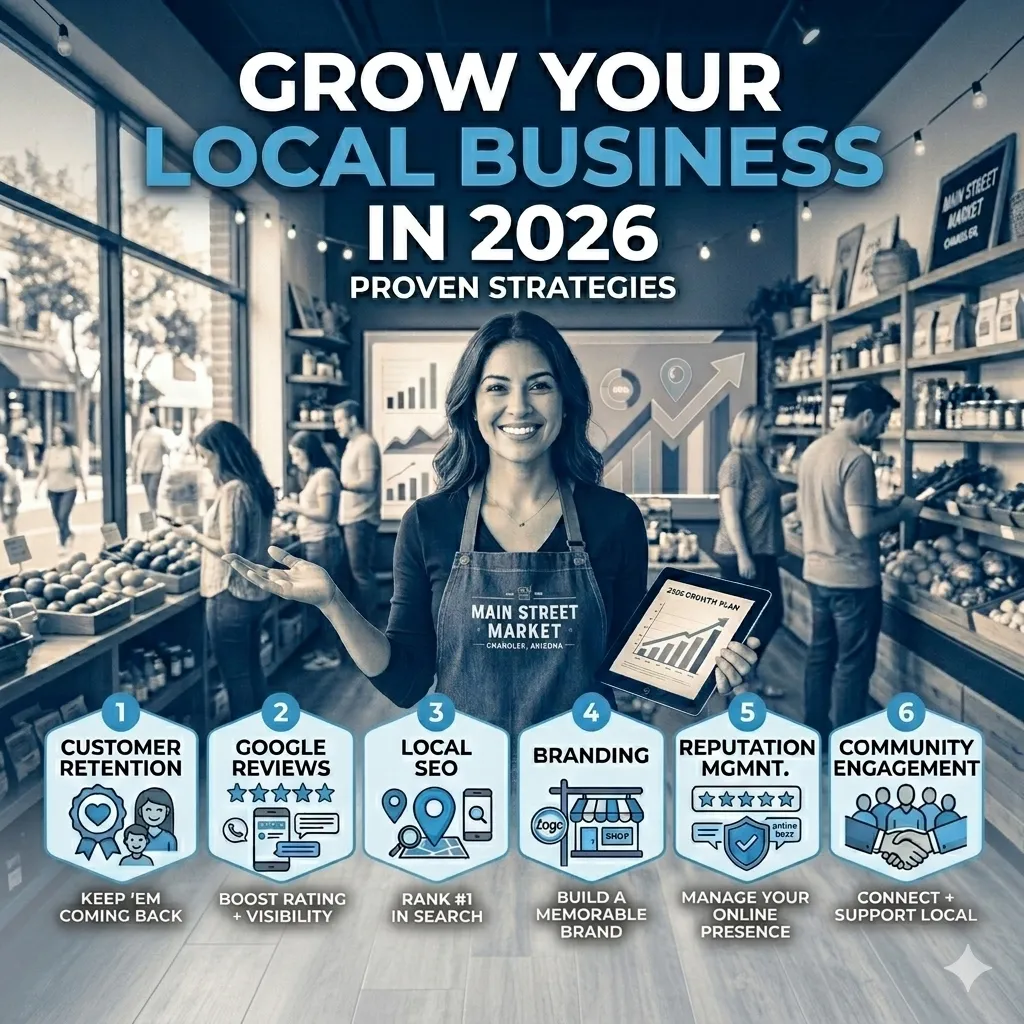
How to Grow a Local Business in 2026
How to Grow a Local Business in 2026
Growing a local business in 2026 is about far more than simply offering a good product or service. Competition is stronger than ever, customer expectations continue to rise, and online visibility now plays a major role in determining which businesses succeed and which struggle to stay relevant.
Today’s customers search online before making almost every decision. Whether someone is looking for a coffee shop, barber, restaurant, gym, contractor, or retail store, they usually begin with Google. They compare reviews, photos, ratings, response times, and overall reputation before ever stepping through the door.
For local businesses, this creates both a challenge and an opportunity. Businesses that understand how to build trust, improve visibility, and consistently deliver strong customer experiences can grow rapidly even in highly competitive markets.
Here are the most effective strategies for growing a local business in 2026.
Build a Strong Online Reputation
A business’s reputation is one of its most valuable assets. Customers trust online reviews almost as much as personal recommendations, and many consumers make purchasing decisions based entirely on what they see online.
This means businesses need to actively focus on:
Generating authentic customer reviews
Responding to customer feedback
Maintaining strong ratings
Creating positive customer experiences consistently
Google reviews play a particularly important role because they influence both customer trust and local search rankings. Businesses with consistent, recent, high-quality reviews are more likely to appear in Google’s local search results and map rankings.
However, review quality matters more than simply chasing volume. Customers can often recognize fake or forced reviews. Authenticity, consistency, and engagement matter far more in the long term.
Responding professionally to both positive and negative reviews also demonstrates accountability and customer care. Businesses that communicate openly often build stronger trust with potential customers.
Optimize Your Google Business Profile
One of the most overlooked tools for local business growth is a properly optimized Google Business Profile.
When customers search for businesses nearby, Google often displays local listings before traditional websites. Businesses that optimize their profiles correctly can significantly improve visibility and customer engagement.
A strong Google Business Profile should include:
Accurate contact information
Updated business hours
High-quality photos
Detailed service descriptions
Consistent review activity
Regular updates or posts
Businesses should also ensure their categories and services are correctly listed. Even small inaccuracies can affect local search performance.
Photos are especially important. Customers are more likely to trust businesses that show real environments, products, staff members, and customer experiences. High-quality visuals help create familiarity before customers even visit.
Focus on Customer Experience
Many businesses focus heavily on marketing while neglecting customer experience. In reality, customer experience often becomes the strongest form of marketing.
Customers remember:
How quickly businesses respond
How staff members communicate
How problems are handled
How easy the experience feels
Whether expectations are met consistently
A positive customer experience creates repeat customers, stronger reviews, referrals, and long-term loyalty.
In competitive industries, customer experience is often the deciding factor between businesses with similar products or pricing.
Simple improvements can make a major difference:
Faster response times
Better communication
Cleaner environments
Easier booking systems
Personalized interactions
Consistent follow-up
Businesses that make customers feel valued often outperform competitors with larger budgets.
Invest in Local SEO
Local SEO, or local search engine optimization, is critical for business growth in 2026.
When customers search terms like:
“best coffee shop near me”
“top rated barber in Phoenix”
“restaurants open now”
“best gym near me”
Google uses local SEO signals to determine which businesses appear first.
Important local SEO factors include:
Google reviews
Business relevance
Location proximity
Website optimization
Local citations
Customer engagement
Mobile-friendly design
Businesses should ensure their website includes clear information about:
Services
Locations
Contact information
Service areas
Frequently searched keywords
Creating city-specific and industry-specific content can also improve rankings. For example, a fitness studio might create blogs about:
Best gyms in Phoenix
Fitness trends in Arizona
Beginner workout tips
Local wellness guides
This helps businesses appear in more local searches while building authority online.
Use Social Media Strategically
Social media continues to influence customer behavior, especially for local businesses.
However, success on social media is not only about gaining followers. Businesses should focus on building trust, familiarity, and community engagement.
Strong local business content includes:
Behind-the-scenes videos
Customer testimonials
Staff introductions
Educational content
Community involvement
Promotions and events
Business milestones
Video content performs particularly well in 2026, especially short-form videos on platforms like Instagram Reels, TikTok, and YouTube Shorts.
Customers often want to see authenticity rather than polished advertisements. Businesses that appear relatable and active tend to build stronger local engagement.
Consistency matters more than perfection. Posting regularly helps businesses stay visible and relevant in crowded digital spaces.
Retain Existing Customers
Many businesses focus heavily on attracting new customers while overlooking existing ones. However, customer retention is often far more profitable than constant customer acquisition.
Returning customers typically:
Spend more money
Leave better reviews
Refer friends and family
Require less marketing effort
Build long-term revenue stability
Businesses can improve retention through:
Loyalty programs
Personalized service
Follow-up communication
Exclusive offers
Consistent customer experiences
Even small gestures can strengthen loyalty. Remembering customer preferences, following up after services, or thanking customers personally can create stronger emotional connections.
Customer loyalty becomes especially important during economic uncertainty or increased competition.
Build Community Presence
Local businesses thrive when they become recognized parts of their communities.
Community engagement helps businesses build:
Trust
Brand recognition
Word-of-mouth referrals
Long-term customer relationships
Businesses can strengthen community presence through:
Sponsoring local events
Supporting charities
Partnering with nearby businesses
Participating in local festivals
Hosting events or workshops
Customers often prefer supporting businesses that feel connected to their communities.
Community involvement also creates valuable content opportunities for social media and public relations.
Track Data and Adapt
Successful businesses consistently analyze performance and adjust strategies accordingly.
Important metrics include:
Review growth
Customer retention
Website traffic
Conversion rates
Social engagement
Local search rankings
Customer feedback trends
Businesses that monitor data can identify:
What customers respond to
Which marketing efforts work
Where operational issues exist
How competitors are performing
Adaptability is critical because customer behavior changes quickly. Businesses that evolve with trends often maintain stronger long-term growth.
Prioritize Consistency
One of the biggest misconceptions about business growth is that success comes from viral moments or short-term trends.
In reality, most successful local businesses grow through consistency.
Consistency includes:
Consistent customer service
Consistent branding
Consistent communication
Consistent quality
Consistent online activity
Consistent review generation
Customers trust businesses that feel reliable and predictable.
Even businesses with excellent products can struggle if experiences vary too much from visit to visit.
Long-term growth is usually the result of steady operational excellence rather than sudden popularity.
Final Thoughts
Growing a local business in 2026 requires a combination of strong customer experience, online visibility, reputation management, and community engagement.
Businesses can no longer rely solely on traditional advertising or foot traffic. Customers now research, compare, and evaluate businesses online before making decisions.
The businesses that grow successfully are the ones that:
Build trust
Prioritize customers
Maintain strong reputations
Adapt to changing trends
Stay consistent over time
While competition continues to increase, opportunities for local businesses remain incredibly strong. Businesses that focus on authenticity, visibility, and customer relationships can still dominate their local markets regardless of size.
In today’s digital landscape, reputation is often the new storefront. Businesses that invest in customer trust and long-term relationships position themselves for sustainable growth well into the future.
