How Social Media Turned Restaurants Into Entertainment Brands
How Social Media Turned Restaurants Into Entertainment Brands
Restaurants used to compete primarily on food quality, pricing, and location.
Today, they compete for attention.
In 2026, the modern restaurant industry operates very differently than it did even a decade ago. Platforms like TikTok, Instagram, and YouTube Shorts have fundamentally reshaped how consumers discover restaurants, evaluate dining experiences, and decide where to spend money.
Food still matters.
But aesthetics, atmosphere, presentation, and online visibility now influence restaurant success almost as much as the actual menu itself.
Many restaurants are no longer functioning solely as places to eat. They are becoming entertainment brands designed to generate content, attention, and social engagement.
The dining experience has evolved into something consumers actively document, share, and perform online.
And that shift has changed the restaurant industry permanently.
The Camera Became Part of the Dining Experience
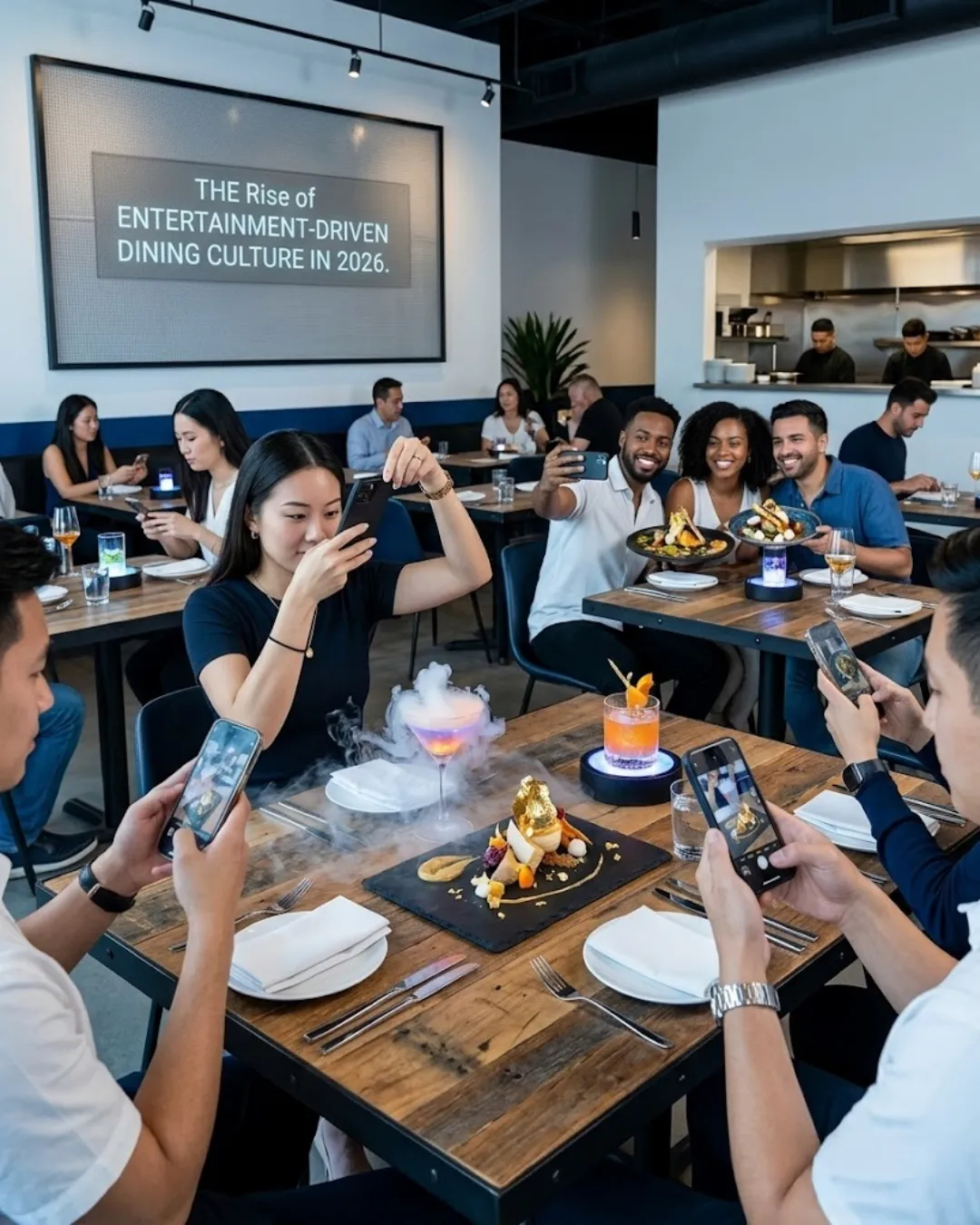
One of the biggest changes social media created is that consumers no longer experience restaurants privately.
Dining has become increasingly public and visual.
Customers now routinely:
photograph meals,
record videos,
post cocktails,
review experiences,
create TikToks,
and share restaurant recommendations online.
As a result, restaurants are increasingly designed not only for in-person customers, but also for smartphone cameras.
Lighting, plating, interior design, signage, cocktails, and even table layouts are often optimized for visual appeal because visual appeal drives online visibility.
In many restaurants today, the camera is effectively part of the customer experience.
And businesses understand that every customer has the potential to become free advertising.
Restaurants Became Social Media Content
Platforms like TikTok dramatically accelerated this transformation.
Consumers now discover restaurants through viral videos far more often than traditional advertising. A single trending clip featuring a visually impressive dessert, dramatic food presentation, or unique atmosphere can generate millions of views and enormous customer traffic almost overnight.
This changed how restaurants think about branding.
Businesses increasingly ask:
Is this visually memorable?
Will people record this?
Does this create shareable moments?
Will customers post this online?
Many restaurants now intentionally engineer “viral moments” into the customer experience.
This includes:
oversized food items,
dramatic cocktail presentations,
interactive dining experiences,
themed interiors,
neon signs,
smoke effects,
tableside preparation,
and highly stylized plating.
The goal is no longer only customer satisfaction.
The goal is social amplification.
Aesthetics Became a Competitive Advantage
In the social media era, aesthetics function as marketing.
Consumers are heavily influenced by visual presentation because platforms prioritize highly engaging imagery and video content. Restaurants that look visually distinctive often gain enormous advantages online, especially among younger demographics.
This is why many modern restaurants invest heavily in:
interior design,
branding,
lighting,
architecture,
packaging,
and overall visual identity.
A restaurant’s aesthetic now directly impacts discoverability.
Highly visual restaurants often outperform less visually appealing competitors online—even when food quality is relatively similar.
This does not necessarily mean food matters less.
It means presentation now affects perception more than ever before.
Consumers increasingly associate visual quality with overall quality.
Food Became Entertainment
Social media also changed how consumers emotionally engage with food itself.
Meals are no longer viewed purely as consumption.
They are experiences.
Restaurants increasingly create food designed to entertain visually before it is even tasted. This explains the rise of:
cheese pulls,
giant milkshakes,
dramatic dessert reveals,
colorful drinks,
flaming cocktails,
layered presentation,
and exaggerated food visuals.
These experiences perform well online because they capture attention quickly.
And attention is the most valuable currency on social media platforms.
In many ways, restaurants now compete similarly to entertainment companies. They must constantly create experiences that feel exciting, visually engaging, and socially shareable.
Virality Became One of the Most Powerful Marketing Tools
Traditional restaurant marketing relied heavily on local advertising, reputation, and word-of-mouth recommendations.
Social media changed the scale entirely.
Today, a restaurant can become nationally known from a single viral post.
TikTok especially transformed restaurant discovery because its algorithm distributes content based on engagement rather than follower size. This allows relatively unknown restaurants to suddenly reach millions of consumers.
Virality now drives:
customer traffic,
waitlists,
reservations,
brand awareness,
influencer attention,
and long-term growth.
Some restaurants experience lines around the block almost entirely because of online visibility rather than traditional advertising.
The internet turned restaurant popularity into a much faster-moving system.
Consumers Want “Experiences,” Not Just Meals
Modern consumers increasingly prioritize experiences over transactions.
This trend became especially strong after the pandemic, when consumers placed greater emotional value on social outings, entertainment, and memorable activities.
Restaurants benefit heavily from this shift because dining naturally combines:
social interaction,
entertainment,
visual stimulation,
and emotional engagement.
As a result, consumers often choose restaurants based on how the experience feels—not simply based on hunger or convenience.
Restaurants that create emotionally memorable environments tend to generate:
stronger online engagement,
better reviews,
more repeat customers,
and higher customer loyalty.
People remember how places made them feel.
Social media amplifies that emotional connection.
Influencers Became Part of Restaurant Marketing
Influencer culture also dramatically reshaped the restaurant industry.
Many restaurants now actively design experiences intended to attract:
food creators,
TikTok influencers,
Instagram personalities,
and local content creators.
Influencers provide something restaurants value enormously:
attention.
A single creator video can introduce thousands—or millions—of potential customers to a business almost instantly.
This changed how restaurants think about exposure.
Instead of relying entirely on paid advertising, many restaurants now prioritize “content-worthiness.” They understand that if customers voluntarily post about the experience, marketing becomes significantly more powerful and authentic.
User-generated content often performs better than traditional advertisements because consumers trust peer recommendations more than direct brand messaging.
Online Reputation Became Business Survival
As social media visibility increased, online reputation became increasingly critical.
Consumers now research restaurants through:
Google reviews,
TikTok,
Instagram,
Yelp,
food creators,
Reddit discussions,
and customer-generated content.
This means every customer experience has the potential to affect public perception.
Strong food alone is no longer enough if the experience feels disappointing online.
Restaurants increasingly succeed when they combine:
quality food,
visual presentation,
customer service,
atmosphere,
branding,
and online engagement.
The industry became far more holistic.
The Pressure to Constantly Stay Relevant
One downside of social-media-driven restaurant culture is constant pressure to remain visible.
Trends move extremely fast online.
Restaurants now feel pressure to:
update menus frequently,
redesign spaces,
launch seasonal items,
follow internet trends,
create limited-time experiences,
and continuously generate content.
The algorithm rewards novelty.
As a result, restaurants increasingly operate inside an attention economy where staying culturally relevant matters almost as much as operational performance.
This creates both opportunities and challenges.
Businesses can grow rapidly through online exposure, but visibility can disappear just as quickly.
Why Smaller Restaurants Can Now Compete
One major benefit of social media is that smaller independent restaurants now have far more opportunity to compete against large chains.
A visually engaging local restaurant can suddenly gain massive exposure online without needing huge advertising budgets.
This has democratized restaurant marketing to some degree.
Independent restaurants with:
strong branding,
unique presentation,
creative concepts,
or highly shareable experiences
can now build national attention organically.
The internet rewards attention-grabbing experiences regardless of company size.
That has significantly changed the competitive landscape of the industry.
The Future of Restaurants Is Experience-Driven
The restaurant industry will likely continue becoming more experience-focused in the years ahead.
Consumers increasingly expect restaurants to provide:
atmosphere,
entertainment,
aesthetics,
social value,
personalization,
and memorable moments.
Dining is becoming increasingly connected to identity and lifestyle culture.
Restaurants are no longer simply selling food.
They are selling experiences consumers want to remember, document, and share publicly online.
That emotional and social component has become one of the most valuable assets in modern hospitality.
Conclusion
Social media fundamentally transformed the restaurant industry by turning restaurants into entertainment brands.
In 2026, aesthetics, presentation, atmosphere, and online visibility influence consumer behavior almost as strongly as food quality itself. Platforms like TikTok and Instagram changed how restaurants are discovered, how customers evaluate experiences, and how businesses market themselves.
The most successful restaurants today understand that modern dining is both physical and digital.
Customers are no longer only eating meals.
They are participating in experiences designed for both real life and the internet simultaneously.
And in the attention economy, the restaurants that create the most memorable experiences often become the ones consumers cannot stop sharing.
